Tea Staining on Stainless Steel Roofs
Tea Staining on Stainless Steel Roofs
What It Is, Why It Happens, and Why It’s Not a Problem
Stainless steel roofs, such as Roofinox HFX, are chosen for durability, strength, and longevity—especially in coastal environments where salt air, wind, and humidity are part of everyday weather. Roofinox stainless steel is designed to last for generations with minimal maintenance and is backed by decades of real-world warranty and performance globally roofinox.com.
What Tea Staining Is
Tea staining is a surface effect, not rust. In coastal environments, airborne salt and moisture create conditions that allow tiny amounts of discoloration to form on stainless steel surfaces. It’s subtle and cosmetic — it does not weaken the metal or shorten the roof’s life.
Why It Shows Up
Near the ocean, salt particles and humidity can cling to the roof surface. Over time, this interaction can leave a light brownish tone. This is more noticeable in sheltered areas that don’t get consistent rainfall washing.
This effect is different from corrosion. Stainless steel’s protective passive layer prevents corrosion, even in saline environments. That’s why stainless steel is widely used in marine, architectural, and high-end residential applications — because it doesn’t rust or fail like other metals roofinox.com.
Does It Matter?
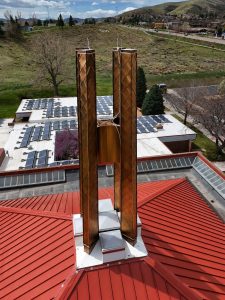
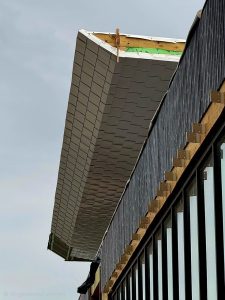
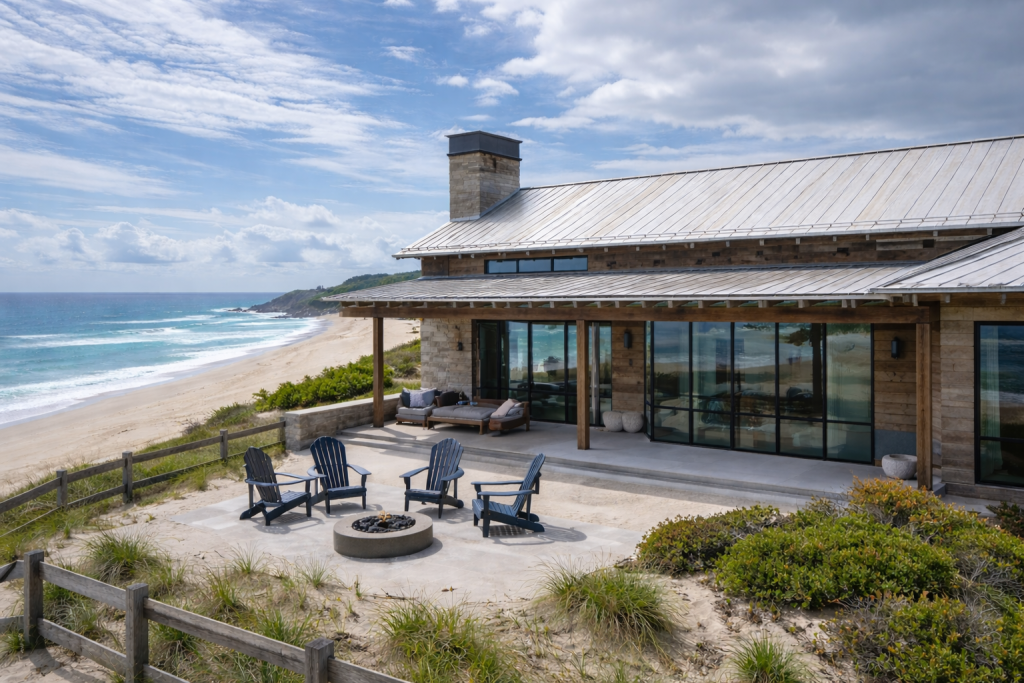
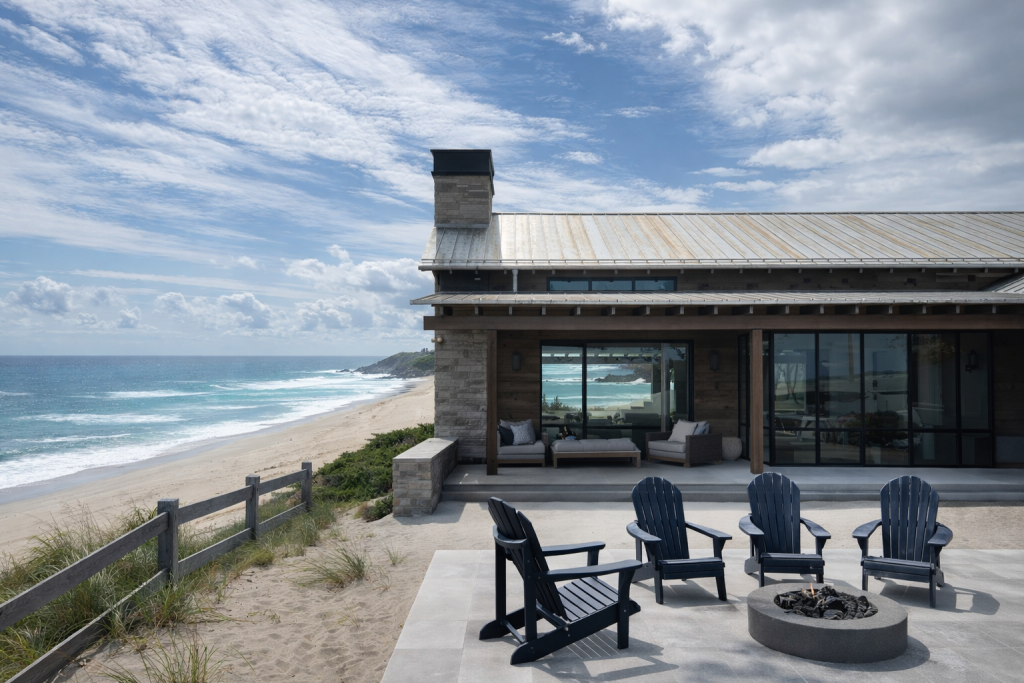
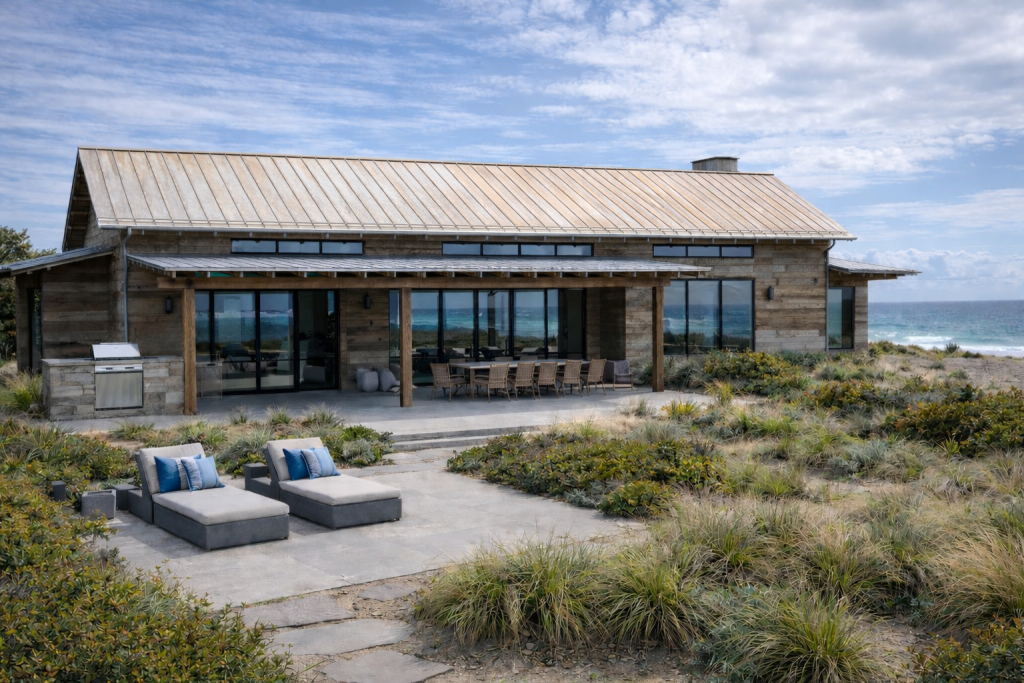
No. Tea staining is cosmetic. It doesn’t affect the roof’s structural performance. A stainless steel roof with tea staining is still one of the longest-lasting roofing materials on the market, especially near the coast. The images on this page provide a realistic sense of how subtle the tea staining can be under natural conditions.
Can It Be Managed?
Yes. In most cases:
-
Normal rainfall helps keep the surface clean.
-
If desired, occasional gentle cleaning keeps the metal looking fresh.
-
Good design detail (free-draining roof geometry and regular rain exposure) minimizes buildup.
That’s all it takes — it’s maintenance, not repair.
Quick FAQ
Is tea staining the same as rust?
No. Tea staining is surface discoloration, not corrosion or structural failure.
Will the roof fail sooner because of tea staining?
No. Roofinox stainless roofs are built to last decades, even in coastal climates.
How do I reduce or remove tea staining?
Regular rainy seasons or occasional gentle cleaning keep the surface looking its best.
Should tea staining stop me from choosing stainless steel?
Not at all. Stainless steel still outperforms nearly every other roofing material in coastal salt environments.
Are those pictures AI-generated?
They sure are.